Scientists Just Found This Bizarre Deep-Sea Creature in a Place No One Expected
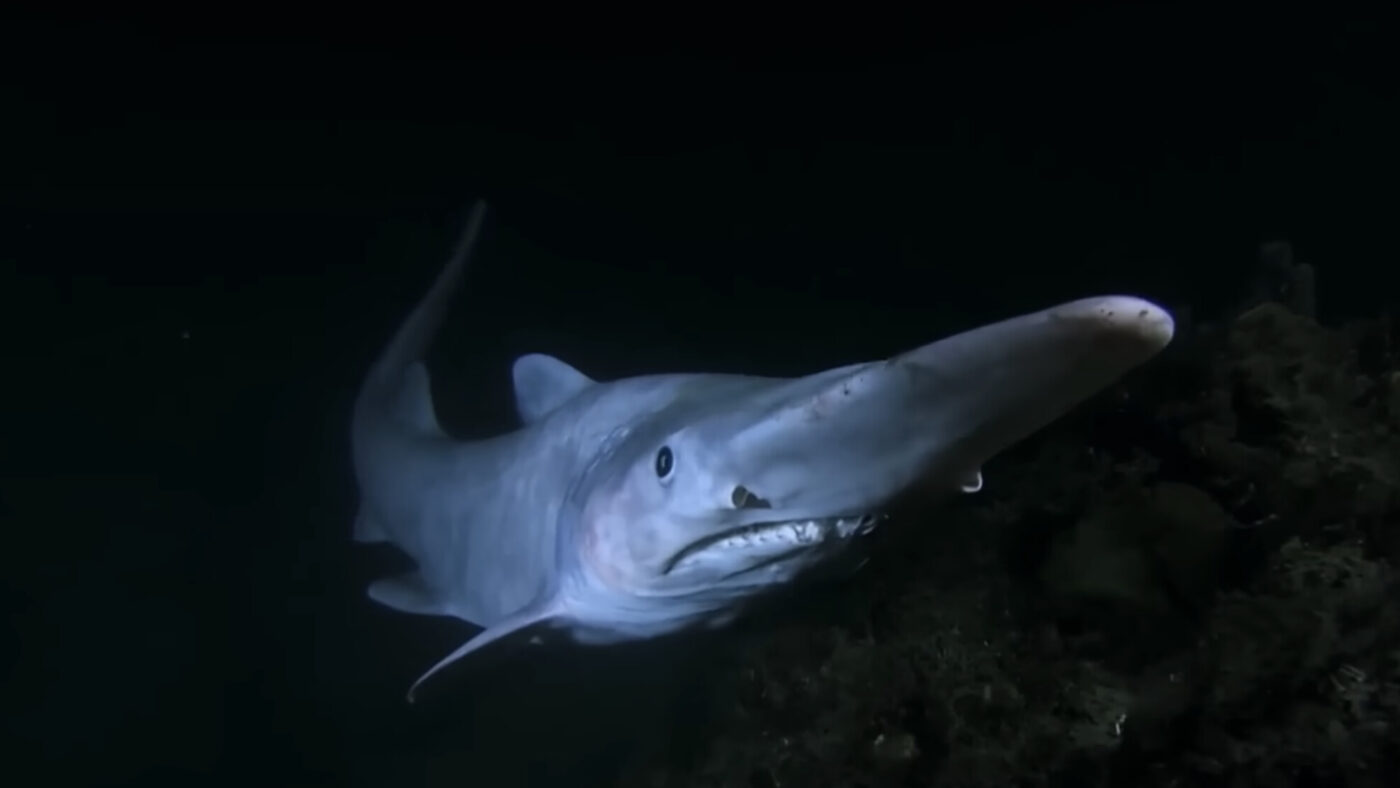
Marine researchers have made a groundbreaking discovery that could change everything we thought we knew about one of the ocean’s most mysterious predators. A team from the University of La Laguna has documented the first-ever sighting of a live goblin shark in the waters surrounding the Canary Islands, a finding that expands the known habitat of this incredibly rare deep-sea species. But what makes this discovery so significant, and what does it tell us about the hidden ecosystems lurking in the deep waters around these volcanic islands?
A Historic Discovery
The goblin shark, measuring approximately 250 centimeters in length, was accidentally captured by recreational fishers at a staggering depth of 900 meters off the coast of San Cristóbal, Gran Canaria. Unlike many deep-sea captures that end in tragedy for these fragile creatures, this shark was carefully released back into the ocean alive, allowing scientists to document this unprecedented encounter. The discovery was published this week in Thalassas: The International Journal of Marine Sciences, marking a significant advance in understanding the geographical distribution of this elusive species.
One of Rarest Sightings on Earth
Goblin shark sightings are so rare that to date, fewer than 250 of these sharks have been documented worldwide, making this Canary Islands encounter an extraordinary event in marine science. The species gets its unflattering name from its truly bizarre appearance, featuring flattened, elongated, spatula-like snouts and protruding jaws complete with sharp, needle-like teeth that seem more suited to a nightmare than nature. These ancient predators are thought to be sparsely distributed across most of the planet, inhabiting both tropical and temperate waters at depths ranging from about 250 meters to 1,500 meters.
The Canary Islands Connection
While goblin sharks have previously been recorded in the northeast Atlantic near Galicia, Madeira, Moroccan waters, and Portugal, this sighting represents a notable expansion of the species’ known distribution range in the Central-Eastern Atlantic. Scientists believe the absence of bottom trawling in the region since the 1980s, combined with the lack of active targeted fisheries for elasmobranchs like rays and skates, may have created a potentially important refuge for deep-sea sharks. In fact, at least 20 shark species known to live in depths greater than 200 meters have been found in the archipelago’s local waters.
Unlocking Migration Mysteries
This sighting also provides new evidence for the intriguing hypothesis that goblin sharks live in different geographic areas depending on their size and age. The eastern Atlantic mostly corresponds to juvenile or subadult goblin sharks, while adults have primarily been dominated in the western Atlantic. The reason why goblin sharks are distributed in this way remains a mystery, but it could reflect ecological or reproductive factors that scientists have yet to fully understand. The research team noted that this record constitutes a notable expansion of the species’ known distribution range.
Protecting the Deep
The finding highlights the ecological significance of deep-sea habitats in the region and underscores the need for continued exploration and monitoring of these poorly studied environments. As human activities increasingly extend into deeper waters, discoveries like this one serve as important reminders of just how little we know about the ocean’s most mysterious creatures and the habitats they call home. The Canary Islands may harbor one of the Caribbean’s most important refuges for deep-sea sharks, making its waters a priority for conservation efforts in the years ahead.





Comments (0)