This Man Spent 200 Days Building a Solar-Powered Explorer Yacht That Can Run Forever
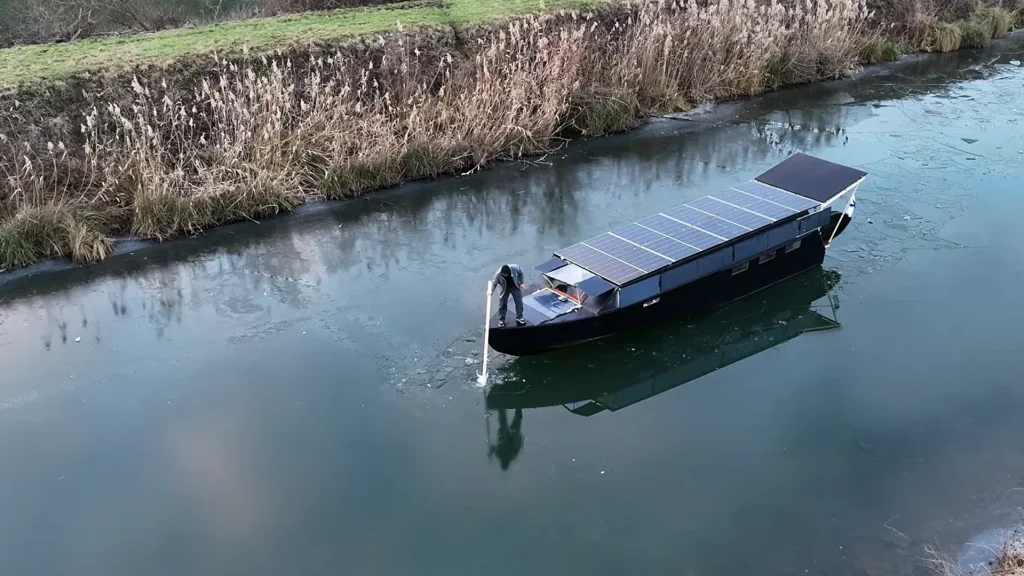
A determined YouTuber has finally launched his groundbreaking solar-powered explorer yacht after spending 200 days constructing it from scratch in Finland. The vessel, named Helios 11, represents years of dreaming and months of hard work, designed to travel indefinitely using only the power of the sun. After completing construction, he sailed the prototype into the frozen canals of France for its maiden voyage, where unexpected winter conditions tested both his patience and his innovative creation.
A Dream Takes Shape in Finland
The builder spent an impressive 200 days transforming his vision into reality, working meticulously to create a yacht that could operate without the need for traditional fuel stops or marina hookups. Finland provided the perfect environment for this ambitious project, offering skilled shipbuilding traditions and cold climate testing conditions. The goal was simple yet revolutionary: create a practical yacht that lived entirely on sunlight and could keep moving without interruption, allowing the owner to explore the worlds oceans freely without worrying about refueling logistics.
First Voyage Hits Unexpected Obstacles
After reaching the canals of France, Helios 11 faced its first real challenge. Sections of the waterway were frozen solid, leaving the innovative yacht stuck in the icy waters until conditions improved. For most builders, this would have been a frustrating setback, but this creator saw it as an opportunity instead. While waiting for the ice to melt, he used the unexpected downtime to pressure test his new concept and conduct experiments that would ultimately lead to an even more groundbreaking discovery about maritime design.
The Breakthrough: Ultra-Narrow Catamaran Concept
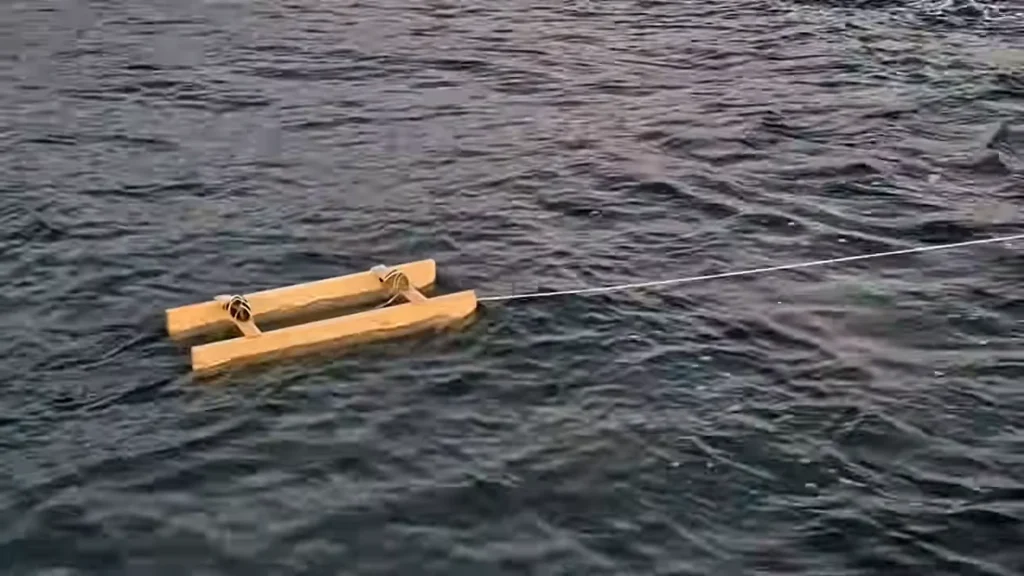
While Helios 11 remained immobilized in frozen water, the builder turned his attention to a new platform: an ultra-narrow catamaran concept he calls Halo 13. He constructed a detailed 1:13 scale model featuring two very skinny boat hulls, then carefully weighted it to match a realistic center of gravity for what a full-size version would require. This experiment, conducted during the forced waiting period, turned out to be the most significant discovery of the entire project. The results suggested he had designed something genuinely game-changing for the world of maritime engineering.
Stability That Defies Expectations
When tested in the water, the scale model demonstrated remarkable behavior across multiple conditions. It stayed calm in waves approaching from the side, head-on, and diagonally, showing predictable and manageable handling in each scenario. The real standout discovery was the models exceptional resistance to capsizing, despite having a relatively narrow beam for its length. According to the builder, only an extreme breaking wave hitting at precisely the wrong angle would pose a serious threat to the vessel. This stability characteristic could revolutionize how solar-powered yachts are designed for long-distance cruising and ocean exploration.
How Solar-Powered Yachts Actually Work
Solar-powered yachts represent the cutting edge of maritime sustainability, using sophisticated technology to harness renewable energy for propulsion and onboard systems. High-efficiency solar panels mounted on the yacht capture sunlight throughout the day, converting it into electrical energy whether the vessel is underway or at anchor. This electricity is stored in advanced battery systems, allowing excess energy generated during sunny periods to be saved rather than wasted. The stored energy then supplies electric motors for propulsion as well as essential onboard systems including lighting, navigation instruments, climate control, and household appliances. Because the yacht relies entirely on electric motors, it operates quietly and produces no direct exhaust emissions, significantly reducing its environmental impact compared to conventional powerboats.
| Project Component | Key Detail |
|---|---|
| Construction Time | 200 days |
| Vessel Name | Helios 11 |
| Build Location | Finland |
| Design Goal | Infinite solar-powered travel |
| Test Platform | Halo 13 catamaran |
| Scale Model | 1:13 ratio |
| Stability Result | Highly capsize resistant |
Power Availability Day and Night
One of the most impressive aspects of solar-powered yacht technology is the ability to operate continuously regardless of sunlight conditions. Even when there is no sunlight available, such as during nighttime hours or during cloudy weather conditions, the yacht can continue operating normally using the energy stored in its batteries. This means that unlike earlier generations of solar vessels, modern designs like Helios 11 can cross oceans and travel through various climate zones without losing propulsion capability. The combination of efficient solar collection and substantial battery storage creates a truly autonomous sailing experience that could redefine long-term cruising.
Whats Next For the Project
Following the promising results from the Halo 13 stability tests, the builder has outlined an ambitious next phase for development. He plans to refine the shape of his new catamaran design based on the data gathered from scale model testing, then construct a scaled Helios 11 model to compare the two designs side-by-side. This direct comparison will help determine which hull configuration offers the best combination of efficiency, stability, and living space for extended cruising. Meanwhile, sailors and renewable energy enthusiasts everywhere will be watching to see when the frozen canals clear and Helios 11 can continue its voyage, proving that solar-powered maritime travel has finally arrived.






Comments (0)