Trump Davos Speech 2026: President Addresses World Economic Forum as Markets React to Greenland Comments
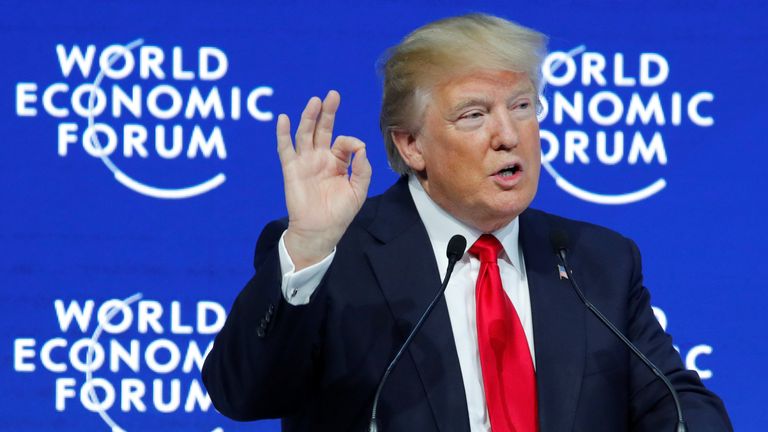
President Donald Trump delivered a highly anticipated special address at the World Economic Forum in Davos, Switzerland, on January 21, 2026, addressing a range of topics including his administration’s position on Greenland, trade policies, transatlantic relations, and the state of the American economy. The speech, which drew significant attention from global markets and world leaders, marked one of the president’s most high-profile international appearances since returning to office and provided insight into his administration’s foreign policy priorities for the year ahead.
The Davos address came at a pivotal moment when markets had been volatile amid concerns about potential trade conflicts and the president’s rhetoric regarding Greenland. Investors around the world watched closely for signals about U.S. economic policy, tariff decisions, and the administration’s approach to allied nations in Europe. The speech’s timing—following a period of market uncertainty and rising geopolitical tensions—made it one of the most-watched economic addresses of the year.
For those seeking to understand what Trump said at Davos, how markets responded, and what the speech means for global economic relations, this comprehensive coverage breaks down the key moments, market reactions, and implications of the president’s address to business and government leaders gathered in the Swiss Alps.
What Did Trump Say About Greenland at Davos?
Perhaps the most anticipated topic heading into Trump’s Davos speech was his position on Greenland, which had generated significant controversy and market concern in the days leading up to the address. The president did not disappoint those seeking clarity, using part of his speech to reiterate his interest in acquiring Greenland while attempting to ease concerns about the use of military force to achieve that objective.
“People thought I would use force, but I don’t have to use force,” Trump told the Davos audience, according to multiple news reports 168. The president emphasized his preference for negotiations rather than confrontation, though he maintained his position that U.S. control over Greenland would be beneficial for American security and economic interests. The statement represented an attempt to walk back some of the more aggressive rhetoric that had unsettled markets and alarmed European allies in preceding days.
The president also doubled down on his view that Greenland’s strategic importance makes U.S. control necessary. “No nation can secure Greenland but the US,” Trump said during his address 163. This framing positioned the administration’s interest as a security necessity rather than territorial ambition, attempting to reframe the discussion in terms of geopolitical responsibility rather than expansionism.
Danish officials and European leaders had expressed concern about Trump’s earlier comments regarding Greenland, which some interpreted as threatening the sovereignty of a NATO ally. The president’s Davos remarks appeared designed to defuse some of that tension while maintaining his core message about the importance of Greenland to American strategic interests.
Trump’s Criticism of Europe at Davos
Beyond Greenland, Trump’s Davos speech included sharp criticism of European policies and directions that the president suggested were not aligned with American interests. The remarks added to tensions between the United States and its European allies at a moment when the administration was already signaling a more confrontational approach to trade and security relationships across the Atlantic.
“Europe is not heading in the right direction,” Trump told the Davos audience 167. The criticism echoed themes the president had emphasized during his campaign and in early administration statements, including concerns about European defense spending, trade practices, and regulatory approaches that the administration views as disadvantages for American businesses.
The critique of Europe came alongside the president’s broader message about American economic strength and his administration’s commitment to putting “America First” in global economic affairs. This framing positioned the United States as a competing economic power rather than a collaborative partner with European nations, marking a departure from the more cooperative tone that characterized some previous administrations’ approaches to transatlantic economic relations.
European leaders attending the Davos forum responded with a mix of diplomatic silence and private concern, with many noting that the criticism risked damaging relationships that had been cultivated over decades of transatlantic cooperation. The exchange highlighted the growing divide between American and European perspectives on issues ranging from trade to defense to the appropriate role of government in economic affairs.
The Strategic Context of Trump’s European Criticism
Understanding Trump’s criticism of Europe requires recognizing the broader strategic context in which the administration is operating. The president has repeatedly criticized European nations for what he views as inadequate defense spending, unfair trade practices, and regulatory frameworks that disadvantage American companies seeking to compete in European markets.
These criticisms are not new—they featured prominently in Trump’s first term and were central themes of his 2024 campaign—but their repetition at a forum designed to promote global economic cooperation underscored the administration’s willingness to challenge established diplomatic norms. By delivering this message directly to a global business audience in Davos, the president ensured that his views would reach corporate leaders and investors who make decisions affecting trillions of dollars in transatlantic commerce.
The timing of the criticism, coming at the start of a new administration and amid ongoing global economic uncertainty, suggested that the administration plans to use its Davos platform as a way of setting expectations for how it will engage with European partners going forward. Whether this approach will lead to negotiated improvements in trade relations or escalating tensions remains to be seen, but the speech made clear that the administration views Europe as a competitor rather than an ally in economic affairs.
Stock Market Reaction to Trump’s Davos Speech
Financial markets reacted with notable volatility to Trump’s Davos speech, reflecting the significant uncertainty surrounding the administration’s positions on trade, geopolitical issues, and economic policy. The trading pattern throughout the day demonstrated how investor sentiment shifted in response to different elements of the president’s address, with initial concerns giving way to relative calm as the speech progressed.
Before the speech, stock futures were mixed to lower as investors braced for potential escalations in the Greenland controversy and any indications of aggressive trade policies that could disrupt global commerce. Dow Jones futures, S&P 500 futures, and Nasdaq futures all showed modest declines in pre-market trading, with investors clearly concerned about what the president might say 146. Gold prices continued their recent rally as investors sought safety amid the uncertainty, reaching another record high ahead of the speech.
Following the president’s comments about Greenland, particularly his statement that he would not use force to acquire the territory, markets showed significant relief. “Stocks opened higher Wednesday after President Donald Trump eased market concerns about a U.S. invasion to secure Greenland,” according to market analysis 148. The Dow Jones Industrial Average was up approximately 0.2% in early trading, recovering from earlier declines that had been prompted by fears of escalating geopolitical tensions.
By the end of the trading day, the major indices had largely stabilized, with the Dow posting modest gains as investors processed the full range of the president’s comments. “Stock Market Today: Dow Gains After Trump Speech; Gold Extends Rally,” reported The Wall Street Journal, capturing the mixed nature of market outcomes 143. The trading pattern suggested that while concerns about trade policy and transatlantic relations remain, markets were relieved that the immediate crisis over Greenland had been defused, at least temporarily.
Market Implications of Trump’s Economic Message
The market reaction to Trump’s Davos speech provides insight into how investors are processing the administration’s economic agenda and what expectations are priced into current market valuations. The initial volatility followed by recovery suggests that investors remain uncertain about the ultimate direction of U.S. economic policy while simultaneously maintaining confidence in the fundamental strength of the American economy.
Throughout his speech, Trump emphasized American economic strength and the administration’s commitment to policies that he said would continue to drive growth and job creation. This message resonated with investors who have been impressed by economic performance metrics even as they express concern about potential policy disruptions. The ability of the president to deliver a message emphasizing economic strength while simultaneously threatening trade actions against allies represents a complex signal that investors are still working to interpret.
Looking ahead, market participants will continue to monitor developments related to tariff policies, trade negotiations with European nations, and any further statements about strategic priorities that could affect market conditions. The relatively positive market reaction to Trump’s easing of Greenland tensions suggests that investors remain hopeful that diplomatic approaches will prevail, even as they prepare for potential volatility associated with the administration’s more confrontational policy positions.
Trump’s Key Messages at Davos 2026
Beyond Greenland and Europe, Trump’s Davos address touched on several themes that define the administration’s economic and foreign policy approach. Understanding these key messages helps explain the administration’s priorities and how it intends to engage with global economic institutions and allies going forward.
American Economic Strength: Trump emphasized the strength of the American economy under his leadership, highlighting job creation, manufacturing growth, and market performance as evidence of successful economic policies. This messaging was designed to project confidence and attract investment to the United States, reinforcing the administration’s “America First” economic agenda.
Trade Policy Priorities: The president used the Davos platform to reiterate his commitment to trade policies that he said would protect American workers and businesses. While specific tariff decisions were not announced during the speech, the tone suggested continued willingness to use trade measures as leverage in negotiations with both allies and strategic competitors.
Geopolitical Positioning: Trump’s address made clear that the administration views the United States as a great power with interests that may conflict with those of traditional allies. The Greenland comments, criticism of Europe, and emphasis on American strength all pointed toward a more transactional approach to international relationships that prioritizes U.S. interests over multilateral cooperation.
World Economic Forum 2026 Context
Trump’s speech took place at the 56th annual World Economic Forum meeting in Davos, a gathering that brings together world leaders, corporate executives, and influential thinkers to discuss global economic challenges and opportunities. The 2026 forum took place amid significant global uncertainty, with trade tensions, geopolitical conflicts, and economic transition creating a particularly complex backdrop for the annual meeting.
The World Economic Forum has long served as a venue for dialogue between business and government leaders, though Trump’s appearance represented a departure from the cooperative spirit that typically characterizes the event. The president’s critical remarks about Europe and emphasis on American exceptionalism contrasted with the forum’s traditional emphasis on multilateral cooperation and shared solutions to global challenges.
Klaus Schwab, founder and executive chairman of the World Economic Forum, introduced the president, highlighting the importance of dialogue between different perspectives on global economic issues. Trump’s address was streamed live globally and watched by millions seeking insight into the administration’s priorities and policy directions.
Live Coverage and Global Reaction
The Trump Davos speech received extensive live coverage from major news networks and financial media outlets, with networks including CNN, ABC News, CNBC, and the Wall Street Journal providing real-time analysis and fact-checking of the president’s remarks 155. The high level of interest reflected both the newsworthiness of the address and the significant market implications of any policy signals that might emerge.
International reaction to the speech was mixed, with European leaders and officials privately expressing concern about the administration’s critical tone while publicly maintaining diplomatic postures. Asian markets, which trade during the overnight hours when Trump’s speech was delivered, showed relatively muted reactions as investors processed the comments and awaited further policy developments.
On social media, the speech generated significant engagement, with supporters praising the president’s assertive defense of American interests while critics expressed concern about the potential for escalating tensions with allies. The polarized response reflected the broader political dynamics surrounding the administration and the ongoing debate about the appropriate balance between American leadership and unilateral action in foreign policy.
What’s Next After Trump’s Davos Address
Following Trump’s Davos speech, attention will shift to several key developments that could determine the trajectory of U.S. economic and foreign policy in the months ahead. The speech established the administration’s positions and priorities, but concrete actions and policy decisions will ultimately shape relationships with allies and the broader investment climate.
Trade negotiations with European nations remain a critical area to watch, as the administration has indicated willingness to use tariff measures to address perceived trade imbalances. The tone of Trump’s speech suggested that these negotiations could be contentious, though the president expressed confidence in the United States’ negotiating position and the strength of the American economy as leverage in discussions with trading partners.
The Greenland situation will continue to develop as the administration pursues what Trump described as “negotiations” regarding U.S. interests in the territory. Danish and Greenlandic officials have indicated openness to discussions on economic and security cooperation, though they have rejected any notion of transferring sovereignty. How these negotiations proceed will significantly affect transatlantic relations and broader geopolitical dynamics.
Markets will continue to monitor the administration for further policy signals, with particular attention to any announcements regarding tariffs, trade agreements, or geopolitical developments that could affect economic conditions. The relative stability of markets following the Davos speech suggests that investors are maintaining a cautious optimism while remaining prepared for potential volatility associated with the administration’s more confrontational policy positions.
Summary: Trump’s Davos 2026 Speech Key Takeaways
President Trump’s address to the World Economic Forum in Davos on January 21, 2026, delivered on expectations for a high-profile articulation of the administration’s priorities and perspectives on global economic affairs. The speech addressed multiple topics of concern to markets, including the Greenland situation, transatlantic relations, and the state of the American economy.
Key outcomes from the speech included Trump’s clarification that he would not use force to acquire Greenland, though he maintained his position that U.S. control over the territory would be preferable to any other nation’s control. The president also delivered sharp criticism of European policies and direction, signaling continued tension in transatlantic relations despite the defusion of immediate concerns about Greenland.
Market reaction was initially volatile but stabilized following the speech, with the Dow Jones Industrial Average posting modest gains as investors processed the news. The relief rally following Trump’s comments about not using force in Greenland suggested that markets had been significantly concerned about the potential for escalating tensions.
Looking ahead, the speech established the framework within which the administration will engage with global economic and political challenges. The emphasis on American strength, willingness to challenge allies, and focus on trade policies that prioritize U.S. interests all point toward a more transactional and assertive approach to international relations that will require careful navigation by both the administration and the global business community.




Comments (0)